
Your Brand Isn't a Media Company Yet. That's the Problem.
Updated: Sep 30
The smartest companies in the world stopped buying attention years ago. They started owning it. Here's what that means, why it matters, and why waiting is the most expensive mistake you can make.
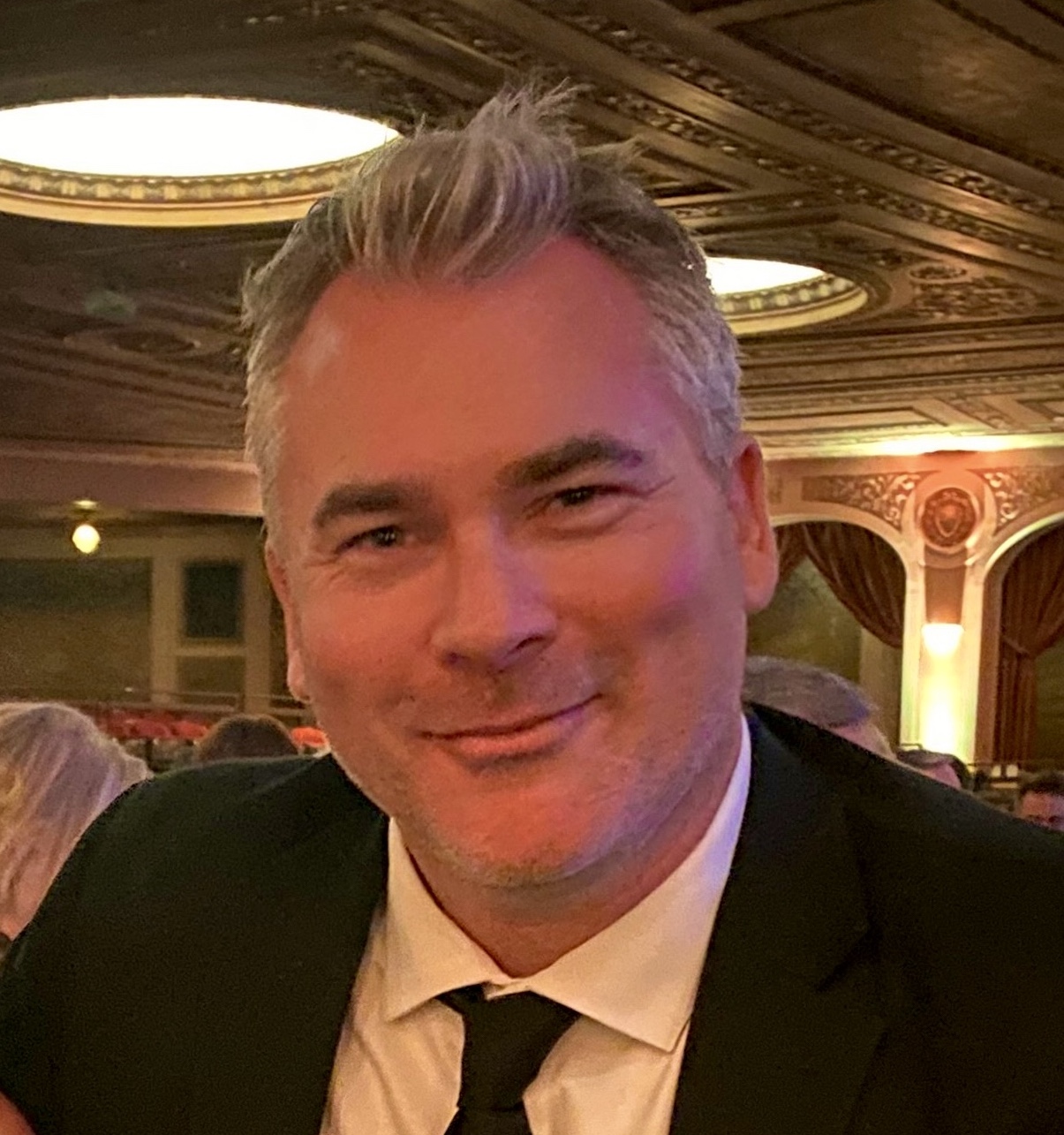
BY JR MITCHELL

Let me tell you about a beverage company that became one of the most powerful media brands on the planet.
Red Bull doesn't just sell energy drinks. Red Bull produces over 600 sports events a year. Red Bull operates a media house with 300,000+ photos and 22,000 HD videos available for editorial use. Red Bull's YouTube channel has generated 120 million views on a single video, the Stratos space jump, and earns licensing revenue from networks around the world. Red Bull Media House is not a marketing expense. It is a profit center.
Here's the kicker: they did this to sell a drink that costs about three dollars.
Now imagine what it means for your business.
The Old Model Is Broken. Most Companies Just Haven't Noticed Yet.
For most of the last century, the equation was simple. You made a product. You bought ads. Enough eyeballs saw the ads. Some of those eyeballs became customers. Repeat.
That equation has been falling apart for twenty years. Ad blockers. Subscription streaming. The death of third-party cookies. Social algorithms that bury brand content in favor of personal posts. Google traffic to publishers down 33% globally between November 2024 and November 2025, according to analytics firm Chartbeat. The traditional media channels that used to carry your message are either fracturing, fragmenting, or going dark.
And here's the cold truth about digital advertising in 2026: you are renting attention.
Every dollar you spend on paid media buys you a temporary lease on someone else's audience. The moment you stop paying, the audience disappears. You own nothing. You've built nothing. You've just made Zuckerberg a little richer.
"The moment you stop paying, the audience disappears. You own nothing. You've built nothing."
The companies that figured this out first didn't panic. They pivoted. They stopped renting and started building. They became media brands.

Brand media, also called owned media or brand publishing, is the practice of building a genuine editorial operation inside your company. Not a blog that publishes product updates. Not a social media account that reposts testimonials. A real media engine with a point of view, a consistent editorial voice, repeatable formats, and an audience that comes back because the content is worth coming back for.
The distinction matters. A lot of companies think they're doing this when they're not. Posting twice a week on LinkedIn and calling it a content strategy is not brand media. Hiring a copywriter to write SEO articles is not brand media. Slapping your logo on a podcast nobody listens to is definitely not brand media.
Brand media is what happens when a company asks: what do we know that our audience actually needs to hear? What can we say that no one else can say? What would people seek out and subscribe to even if our product didn't exist?
That question changes everything about how you build content. It stops being marketing. It starts being media.
Let's talk about what this actually looks like in practice.
HubSpot, a CRM software company, has been building a media operation for over a decade. Their blog alone generates five million visits a month. To replicate that traffic through paid advertising would cost an estimated $25 million per month. Instead, they own it. They built it. It compounds.
In early 2026, HubSpot acquired Starter Story, a founder-focused media platform with 800,000 YouTube subscribers, 275,000 newsletter subscribers, and 1.6 million total followers, adding it to a media portfolio that already includes The Hustle, My First Million, and Trends. The HubSpot CTO put it plainly back in 2020: 'Next-gen software companies will have a media company embedded inside.' HubSpot didn't say that. HubSpot proved it, acquisition by acquisition.
Coinbase founder Brian Armstrong wrote an essay arguing that every tech company should go direct to their audience and become a media company. Semrush acquired Backlinko in 2022 to own the top SEO education audience. Zapier acquired Makerpad to own the no-code community. JP Morgan, the world's largest financial services institution, bought The Infatuation, a restaurant review platform, to own a relevant lifestyle audience.
The message being sent by the smartest companies in the world is not subtle. Owning a media audience has become a core strategic asset. Not a nice-to-have. A moat.
Growth in VP of Content job postings in 2025–2026 308%
US creator advertising spend in 2025, growing 4x faster than the overall ad industry $37B
What HubSpot would pay for its blog traffic if it bought it instead of built it $25M/mo
Views on a single Red Bull video — for a company that sells energy drinks 120M

I've spent the last several years building exactly this kind of operation, not for a corporation, but for a founder who saw the opportunity before the industry did, and was either visionary or reckless. The market settled that debate.
When JoySauce TV launched as the first all-AANHPI streaming network, we didn't have Netflix's budget. We didn't have Disney's infrastructure. What we had was a story worth telling, a community that had been waiting for it, and a belief that if we built something people actually wanted to watch, they would come.
We built a network. Full editorial voice. Strong brand. An engaging programming slate. JoySauce Late Night, a recurring show format I developed with founder Jonathan Sposato, launched and showran from scratch. A content calendar that ran fifty-two weeks a year across YouTube, Instagram, TikTok, LinkedIn, and Facebook, each platform with its own grammar and each piece of content written for the specific way that platform rewards attention. We built a brand publishing operation inside a streaming company and watched it earn recognition, press coverage, and audience loyalty that no paid campaign could have purchased.
Then Amazon Prime Video came calling. We launched on one of the biggest platforms on the planet, built one of its most rapidly rising FAST channels, built JoySauce.tv, and brought our own standalone streaming app to market. The buzz is no longer a whisper. And there is an announcement coming - one I'm not allowed to talk about yet - that will put JoySauce TV in over 200 million homes. Stay tuned doesn't begin to cover it.
That's what this looks like from the inside. It's not magic. It's architecture. It's knowing what story you're telling, who you're telling it to, and what format they'll actually watch, read, and share. It's having the editorial judgment to know what not to make. And it's building the operational systems that keep it going week after week, year after year, without burning out the team or losing the voice.
"It's not magic. It's architecture."
I've also produced this kind of content at scale for brands, agencies, and clients across thirty years. Two thousand commercials and brand campaigns. Broadcast television. Unscripted formats. Academy Awards shortlisted documentary film. The through-line in all of it has been the same question Red Bull asked and HubSpot answered and every smart company is now asking: what can we say that people will actually choose to hear?

I'm telling you all of this not to impress you, but to impress upon you that I've watched this from both sides of the camera. I've seen what happens when a brand decides to become a publisher. I've seen the audience build. I've seen the trust compound. I've seen what it means when the content starts doing the work that the marketing budget used to do, and does it better, longer, and for a fraction of the cost. The global media market is on its way to $3 trillion by 2034. Forbes moved to a hybrid event model and saw a 60% increase in event revenue — a media brand generating revenue streams that a product company never could. Newsletter subscribers who feel personally served retain at 58% higher rates than those who don't. The audience that chooses you outperforms every paid channel you could ever buy. The market has already decided. It's just waiting for your company to catch up.
Some companies are already reading the room. Luxury Presence is building a media brand for the real estate industry in real time. Ramp is explicitly on record: they want to be the voice people seek out at the intersection of technology and finance, not just the tool they use to manage it. And Pace is doing it for the financial services industry at the agency level, helping brands like Truist and USAA tell stories worth hearing. These are not outliers. They are the early movers. And early movers in media win.
So here is what I would tell any company sitting on the edge of this decision. Start with the question Red Bull asked, and HubSpot answered: what do we know that our audience actually needs to hear? Not what do we want to say about our product, but what does our audience need that only we can give them? Find that intersection of your proprietary knowledge and their genuine need. Build an editorial voice that serves the reader first and the brand second. Choose two or three formats and commit to them with consistency rather than chasing every platform.
Find someone who has built something people actually watched. Not a content manager. Not a social media coordinator. A builder. Someone who has developed a show format from scratch, launched it, and kept it alive week after week. Someone who has stood in an edit bay at two in the morning trying to find the moment where the audience leans in. Someone who has directed a scene, written a brief, run a network, and still knows how to tie it back to a business objective before the meeting ends. They do not need to understand fintech. They do not need to understand hospitality. The new Dune trailer just dropped; Dune didn't require Frank Herbert to understand the physics of interstellar travel. It required him to understand war, and idol worship, and love, and loss, and how to move people with a story that felt true even when nothing in it was real. That is the credential that matters. Vision married to craft, married to the discipline to execute at scale. Find that person. Give them the keys. Then get out of the way.
About the Author
JR Mitchell is an award-winning filmmaker, writer, and executive producer with thirty years of experience building media operations, editorial voices, and content strategies for brands, networks, and streaming platforms. He is the Vice President of Content & Brand at JoySauce TV, the first all-AAPI streaming network, and the founder of Osobarra Films. His documentary Satan & Adam is Academy Award-shortlisted, Tribeca-premiered, and has been acquired three times - by Netflix, Peacock, and Tubi, where it is currently streaming with a Certified Fresh rating from Rotten Tomatoes. His next documentary, Reconnected, is in post-production, and JoySauce TV's new slate of original programming drops later this year. He writes about media, storytelling, and the business of content at osobarrafilms.com.


Comments