
The Streaming Revolution: A Journey Through Time
Updated: Sep 30
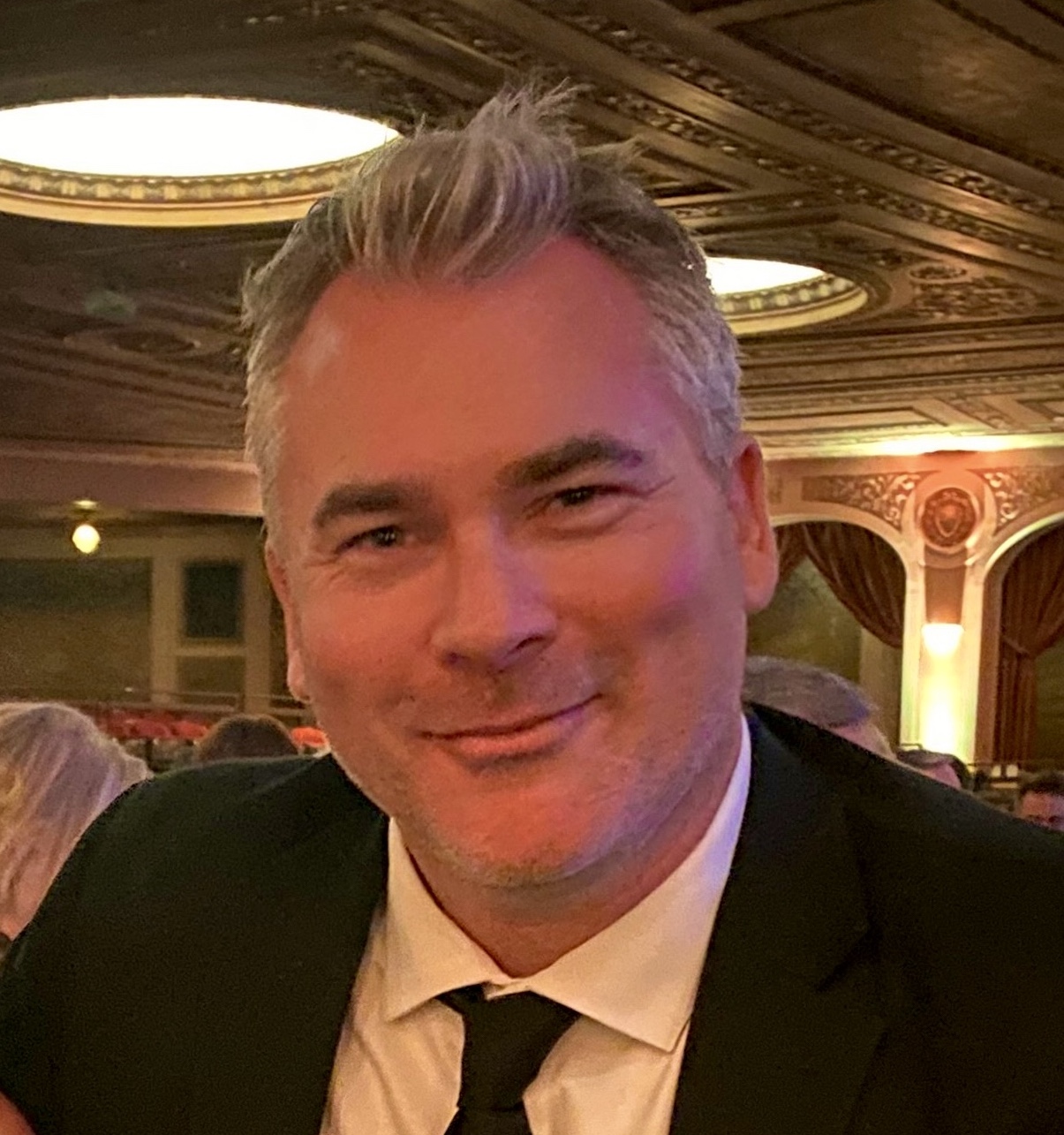
By JR Mitchell
There's a scene in HBO's Silicon Valley that I think about every time a tech company announces it's going to fix an industry. It's the montage where every startup founder at a party says the same thing: "We're making the world a better place through..." and then some incomprehensible string of jargon. Scalable fault-tolerant distributed databases. Canonical data models for end-point communication. The punchline isn't the jargon. The punchline is that they all believe it.
The streaming revolution had the same pitch. Netflix wasn't just a DVD company that figured out broadband. Netflix was going to liberate you. No more cable bundles. No more appointment television. No more ads interrupting your story right when it gets good. Choice. Freedom. Control. A better world through monthly subscriptions of $8.99.
Disney+ launched at $6.99 and told you it was about bringing families together. Peacock said it was reinventing the relationship between content and audience. Every streamer that entered the market between 2019 and 2022 arrived with the same messianic energy, the same thinly veiled conviction that they were saving you from the broken system that came before.
And the broken system they were saving you from? It was the one that ran on advertising.
Here's what they didn't say out loud: the mission wasn't to improve television. It was to own television. To disintermediate the cable companies, capture the audience directly, and control the pipe. The technology was real. The disruption was real. But the altruism was marketing. What they wanted was market control, and the subscription model was the vehicle, not because it was better for audiences, but because it cut out the middleman and sent the money straight to the platform.
It worked. For a while.

The SVOD bet was simple: if you could get enough subscribers paying enough money every month, you wouldn't need advertisers at all. You'd own the audience. You'd own the revenue. You'd own the whole game.
So they spent. Netflix hit $17 billion in content spend. Disney hemorrhaged cash. Every major media company launched its own streaming platform because the alternative, licensing your content to someone else's platform, felt like handing over the keys. The streaming wars weren't really about content. They were about who got to be the new cable company.
And then subscription fatigue happened. Not as a theory. As math. The average American household was paying for four or five streaming services. Then six. Then the prices started climbing. Disney+ went from $6.99 to $15.99. Netflix crept past $22 for its premium tier. The promise of liberation from the cable bundle had quietly become... a new bundle. More expensive than the old one. With fewer channels. And you had to manage the billing yourself.
The consumers did what consumers always do when the value proposition breaks. They started canceling. Churn became the streaming industry's most terrifying word. The "sub, binge, churn" cycle became so common that the people doing it got their own name: nomadic subscribers.
And every single platform responded the same way.
They brought back the ads.

On July 1, 1941, a ten-second spot aired on WNBT in New York before a Brooklyn Dodgers game. A clock face over a map of the United States. A voice that said: "America runs on Bulova time." Bulova paid nine dollars for that ad. Nine dollars, four for airtime, five for station charges.
That nine-dollar bet launched a multi-billion-dollar industry that turned television from a novelty into the most dominant mass medium of the twentieth century. Not subscriptions. Not pay-per-view. Not pledge drives. Advertising. Sponsors paid to reach an audience. The audience watched for free. The content existed because the economic engine underneath it worked.
By 1950, nine percent of American households had a television. Fifteen years later, it was ninety-two percent. That adoption curve, from curiosity to ubiquity in a decade and a half, wasn't driven by the quality of the programming, though the programming was good. It was driven by the business model. Television was free. It was free because advertisers paid for it. And advertisers paid for it because it worked.
That was the model for sixty years. Then Silicon Valley showed up and said they could do it better, without the ads, if you'd just pay a monthly subscription. Making the world a better place through ad-free premium content delivery.
That pitch lasted about a decade.
Netflix launched its ad-supported tier in November 2022. Disney+ followed. Amazon turned on ads for all Prime Video viewers; eighty-five percent of its audience now watches with advertising. Peacock launched with ads from day one. HBO Max added an ad tier. The company that literally built its brand on the absence of commercials is now generating a significant and growing share of its revenue from commercials.
As of late 2025, forty-five percent of Netflix's U.S. households watch on the ad-supported tier. All net new Netflix subscribers that year came from ad-supported plans. The ad-free subscriber base actually shrank. Netflix is on track to double its ad revenue. The most iconic subscription platform on earth is becoming an advertising platform. And they're not embarrassed about it because the numbers are too good to be embarrassed about.
Two-thirds of viewers now say they'd rather save money and watch with ads than pay more to avoid them. Only one in eight say they can't tolerate ads at all. The audience has delivered its verdict, and it's the same verdict the audience delivered in 1955: we'll watch the ads if the content is good and the price is right. The price that's right, as it turns out, is free.
The streaming revolution didn't disrupt television. It took a $100 billion detour to prove that television was right all along.

I'm the VP of Content & Brand at JoySauce TV, the first all-AAPI streaming network, one of the fastest-growing networks in North America, on Amazon Prime Video, Roku, Plex, with our own standalone streaming platform and our own app. Two distribution announcements are coming that will push us way past the 200 million U.S. homes in which we're currently streaming. I'm not writing this as analysis. I'm writing it as someone who programs a channel, watches the numbers, and navigates the economics of this business every day.
FAST, Free Ad-Supported Streaming Television, is the term of art. But I want you to hear what it actually describes: linear programming, scheduled content, lean-back viewing, ad breaks. That is television. It's television rebuilt on internet infrastructure with better targeting and better data, but the architecture is the same architecture that made broadcast TV the most effective advertising medium ever created.
And it's growing at a pace that makes the SVOD model look like it's treading water. Time spent on major ad-supported streaming services grew forty-three percent year-over-year in 2025. Tubi has 100 million monthly active users, more than Disney+ in the U.S. by some measures. U.S. FAST ad revenue is projected at $5.78 billion for 2025. CTV ad spending is expected to hit $30 billion by 2026. The global AVOD market is on pace to grow from $18.5 billion to over $73 billion by 2033.
Those aren't niche numbers. Those are the industry-is-moving-here numbers. And they track with what I've seen from my own film. When Satan & Adam was on Netflix, the economics were simple: they paid a licensing fee, once, and the film lived on their platform, generating value for them. There's no backend on a Netflix deal. No revenue share tied to how many people actually watch your film. The check is real. But it's also the ceiling. Your film could be the most-watched documentary on the platform for a month, and your bank account doesn't move.
When Satan & Adam moved to Peacock and Tubi, the economics flipped. AVOD platforms operate on revenue share. Every time someone watches, ads run, and you earn a percentage. There's no big upfront number. There's a meter that keeps running. And the non-exclusive model means the same film can generate revenue across multiple platforms simultaneously, not locked behind one wall, but working across the entire ecosystem. The industry has framed SVOD as the prestige outcome and AVOD as the consolation prize for twenty years now. That framing is increasingly expensive to believe.

Here's what the streaming revolution actually proved:
The technology changed. The distribution changed. The interface changed. The fundamental economic engine, selling advertiser access to an audience, didn't change at all. It just took a decade and hundreds of billions of dollars in content spending to confirm what the broadcast industry knew in 1952.
Advertising is the lifeblood of television. It was the lifeblood when there were three channels and a rabbit-ear antenna. It was the lifeblood during the cable era. It's the lifeblood now, on connected TVs and FAST channels and ad-supported tiers of platforms that once swore they'd never run a commercial.
The tech companies didn't want to improve TV. They wanted to own it. Disintermediate the gatekeepers, capture the audience, control the pipe. And they did. But the revenue model they landed on, after burning through more capital than any content industry has ever seen? The same model the cable companies used. The same model the broadcast networks used. The same model Bulova used for nine dollars in 1941.
The technology just changed who collects the check.
For a network like JoySauce, this is actually liberating. We didn't launch with a messianic pitch about saving television. We launched with a clear-eyed understanding that television's economic engine works, and that the audiences we serve, AAPI communities that have been historically underserved by every version of the system, deserve access to that engine. We built our own channel. We program it ourselves. We own the relationship with our audience. And the model that supports it is the same model that has supported every successful television operation since the Bulova clock.
FAST isn't a disruption. It's a homecoming. The industry spent a decade running away from ads. Now it's running back. The only difference is that some of us never left. Gavin Belson said it best: "I don't want to live in a world where someone else is making the world a better place better than we are."
Neither did the streamers. Turns out the world didn't need them to make it better. It needed them to stop pretending nine dollars was a broken model.

JR Mitchell is an award-winning filmmaker, writer, and executive producer with thirty years of experience building media operations, editorial voices, and content strategies for brands, networks, and streaming platforms. He is the Vice President of Content and Brand at JoySauce TV, the first all-AAPI streaming network, and the founder of Osobarra Films. His documentary Satan & Adam is Academy Award-shortlisted, Tribeca-premiered, and has been acquired three times — by Netflix, Peacock, and Tubi, where it is currently streaming with a Certified Fresh rating on Rotten Tomatoes. He writes about media, storytelling, and the business of content at *osobarrafilms.com


Comments