
Brevity Isn't the Point. Depth Is.
Updated: Sep 30

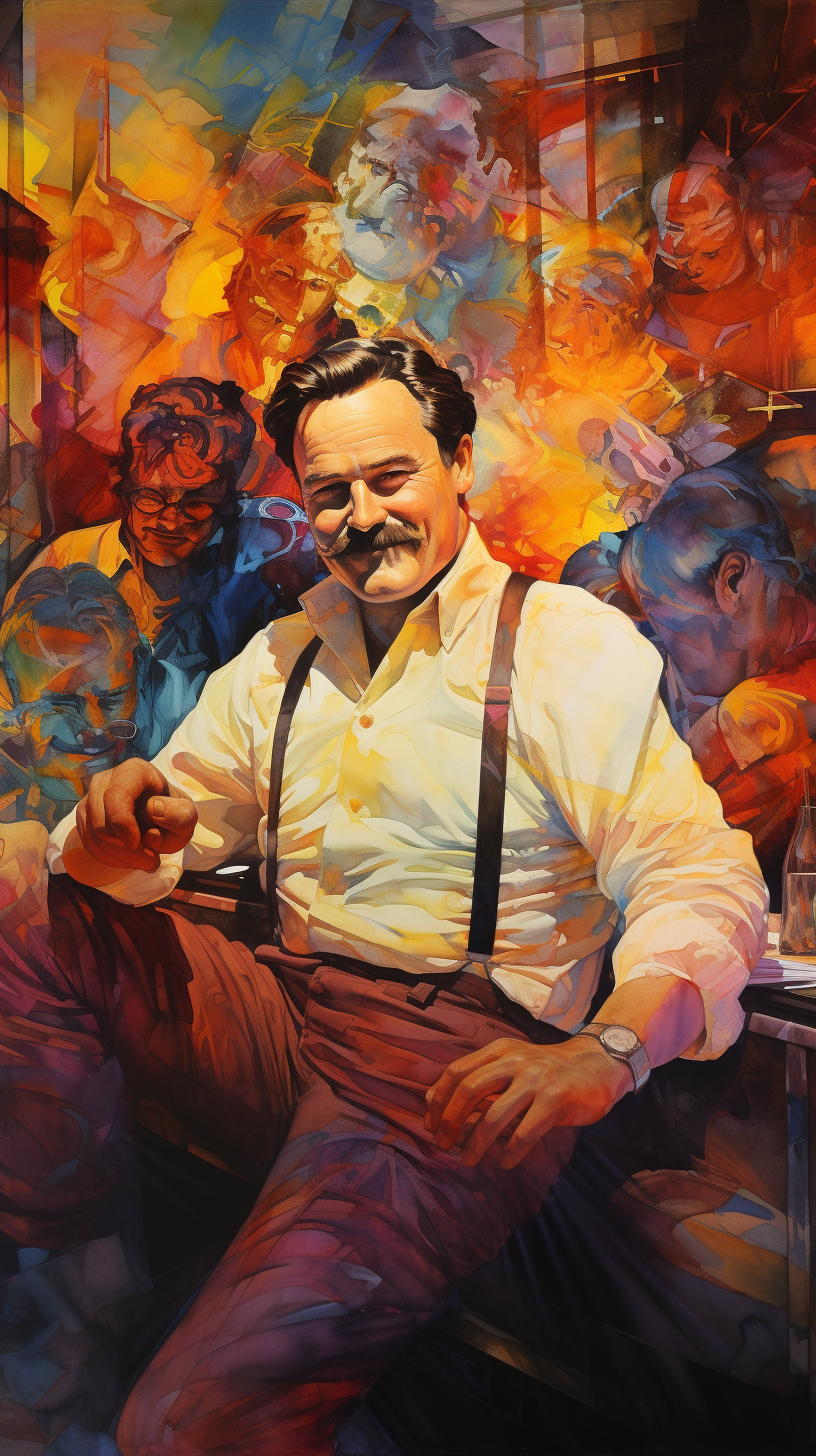
Hemingway, likely eight daiquiris deep under a Key West palapa, set a standard that still echoes in every edit bay and every content strategy deck I've ever sat in front of. But the lesson most people take from him is the wrong one.
They think the lesson is: be short.
The lesson is: know what to cut.
Those are not the same thing.
You know the story. Or maybe you do.
Hemingway’s brilliance lay in his ability to condense complex emotions and narratives into a few meticulously chosen words. In his famous six-word story, supposedly told to a young writer at one of his well-worn saloons. The legend goes that he asked the boy to write him a story in six words. The young man stared back and said it was impossible. Papa grabbed a bar napkin and scribbled:
For sale: Baby shoes, never worn.
Six words. A whole life in them. It's become the patron saint anecdote of the brevity-is-king crowd, the TikTok strategists, the Reels consultants, the people who will tell you with a straight face that you have 1.7 seconds to hook a viewer, and if you haven't done it by then, you've lost.
Here's the thing. That six-word story works because every single word is doing three jobs. Not because there are only six of them. "Baby shoes" is doing one thing. "Never worn" is doing something entirely different. And the space between them, the thing Hemingway doesn't say, is doing the heaviest lifting of all.
That's not brevity. That's compression. And compression is a craft skill that requires knowing what the story actually is before you start cutting.
Most short-form content skips that step entirely. It starts short. It doesn't earn short.

There's a reason that kid in the Darth Vader outfit, seemingly starting his dad's Volkswagen with The Force, still lives rent-free in everyone's head fifteen years later. It's sixty seconds. It has no dialogue. No voiceover. No product features. No call to action. And it did more for that brand than a thousand pieces of optimized content ever could.
Why? Because it understood something about the relationship between a parent and a child that had nothing to do with cars. It found the emotional truth first, then built the container around it. The brevity was a consequence of the clarity. Not the other way around.
I've spent thirty years in edit bays, and the single most important thing I've learned is this: you cannot cut your way to a story that isn't there. You can cut your way to a better version of a story that is. Those are two completely different editing problems, and most brands are trying to solve the first one while telling themselves they're solving the second.
The current short-form content machine rewards speed and novelty. Post daily. Catch the trend. Ride the audio. And look, there's a version of that strategy that works for awareness. I'm not going to pretend otherwise.
But awareness without resonance is just noise with good metrics. Your impressions look great. Your brand recall is nonexistent. Six months from now, nobody can name a single thing you posted, because nothing you posted made them feel anything that lasted longer than the scroll.
The brands that break through, and I mean actually break through, not just spike and fade, are the ones that treat every piece of content like it has a story to tell, even if that story is fifteen seconds long. They understand compression. They understand that "show, don't tell" doesn't mean "show everything fast." It means show the one thing that matters and trust your audience to fill in the rest.
Hemingway trusted his reader. That's the lesson. Not "be short." Trust your audience. Give them credit for being smart enough to meet you halfway. And then give them something worth meeting.

I've produced content across every format, broadcast, streaming, documentary, branded, and social. The projects that land hardest are never the ones where we started with a runtime target. They're the ones where we started with a question: what is this actually about?
When you know what it's about, not the product, not the feature, not the campaign objective, but the human thing underneath all of that, the right length reveals itself. Sometimes that's six seconds. Sometimes it's six minutes. Sometimes it's a feature documentary. The container follows the content. The content follows the truth.
The brands winning right now aren't winning because they're short. They're winning because they're specific. Because they know what they're saying, and they've cut everything that isn't that. Because they've done the Hemingway thing, not the bar napkin party trick, but the real thing. The thousands of pages he wrote and threw away so the six words that were left could carry the weight of everything he didn't say.
That's the work. It was never about the word count.

Comments